By: Rose Kores
Edited By: Olivia Babcock
At 8:46 a.m. on Tuesday, September 11, 2001, the trajectory of American society changed forever. Twenty-five years ago, what started as a normal day ended as one of the most consequential days in modern history. On this day, 19 terrorists associated with the al-Qaeda extremist group initiated separate suicide attacks across the country to incite fear in and seek vengance on the United States due to the foreign policies and military action it imposed in the Middle East.
The attacks claimed the lives of more than 2,977 victims and over 400 first responders and law enforcement officers.1 While America and many of its neighbors were shaken to their cores, after the rubble and sorrow began to settle, several realities became apparent. First, although the United States had endured war and destruction before, the events that unfolded on 9/11 were different. For the first time in modern American history, the nation’s sense of security and strength was profoundly shattered. The attacks exposed the United States as vulnerable—not the impenetrable superpower it had long understood itself to be.
The attacks were unprecedented and the United States was ill-prepared to navigate them. A lack of adequate radio equipment and interoperability quickly overwhelmed emergency call centers. Insufficient communication channels between state, local, and federal government agencies and dated telecommunications infrastructure and norms hindered a more efficient and communicative response. Had advanced measures and equipment been implemented, it is possible that fewer lives would have been lost and the resulting public outcry and confusion might have been better managed.
Emergency Services
During the disaster, first responders struggled to communicate due to a lack of interoperability among the radio systems and over-crowded communication channels. Among the victims were more than 400 first responders, including firefighters, police officers, and Port Authority officers. About 343 of the first responders who were dispatched to the World Trade Center perished due to their inability to communicate quickly and effectively across channels. These deaths revealed a significant gap in public safety communications and fundamentally changed the National Institute of Standards and Technology’s (NIST) research focus. As a result, the 9/11 Commission made communications research for public safety a priority and tasked NIST with finding solutions.
One issue that came to light was that radio equipment tends to differ across regions and departments. Since uniform standards were not enforced to enable first responders to communicate across different radio models and frequencies, call centers were unable to accommodate the surge in calls and were unable to coordinate with other departments to distribute the workload more equitably and keep responders informed.2
In 2012, Congress established the First Responder Network Authority to administer the creation of a national broadband network geared towards enhancing public safety. The network, known as FirstNet, spans more than 3 million square miles, providing coverage for suburban, rural, urban, and tribal lands, supporting over 8.2 million connections.3 The Middle Class Tax Relief and Job Creation Act of 2012 was enacted to fund the design and implementation of FirstNet, which allows responders to stream live video footage, transmit maps, and securely share operational data. It also enables them to receive priority access to network connections during intense periods of crisis or spikes in communication traffic.2
The National Institute for Occupational Safety and Health (NIOSH) developed the Emergency Response, Safety, and Health database in the wake of the 9/11 attacks to inform first responders about common chemical, biological, or nuclear agents that are often utilized in terrorist attacks.2 Such initiatives have strengthened first responders’ ability to identify and manage hazardous materials while reducing the risks they face during crises.
Government Agencies
Government and public safety communications have transformed dramatically since 9/11, shifting from isolated local radio systems and siloed data to integrated, high-speed nationwide networks. Perhaps one of the biggest governmental failures amidst the attacks was that the U.S. government had access to intelligence that could have helped expose the terrorists’ plot, however, this information was withheld from other government agencies, preventing them from coordinating a plan of action to prevent or alleviate the severity of the attacks. The Federal Aviation Administration and the Pentagon’s National Military Command Center failed to quickly share real-time flight telemetry, causing the military to receive delayed and inaccurate updates about the hijacked planes.4
Consequently, the Department of Homeland Security was established after the attacks, consolidating 22 separate entities under a single cabinet-level department tasked with supporting the safety and security of the nation.5 Local, state, and federal agencies also joined forces to expand their intelligence-sharing capabilities through enhanced networks that could more effectively transport information across institutional boundaries.6
Fusion centers were established in each state and were run by local and state government agencies, with additional support from the federal government. The United States now contains 80 fusion centers which serve as intelligence hubs that allow law enforcement entities to share information, analyze data, and identify potential threats across jurisdictions.6 Additionally, the Federal Bureau of Investigation expanded its Joint Terrorism Task Forces from 35 before 9/11 to 200 following the attacks, creating a framework for federal investigators, state authorities, and local law enforcement officials to share information, coordinate responses, and develop more comprehensive approaches to addressing terrorism.6 While state, local, and federal agencies have made significant progress in addressing the gaps in intergovernmental communication systems, continued efforts are needed to strengthen emergency preparedness and protect public safety.
Broadcast Journalism
Since 9/11, news media have shifted from slow, centralized television broadcasts to instant, digital, and mobile-driven real-time sharing. The disaster solidified the need for news channels to provide non-stop coverage of major events, instead of continuing their earlier model in which a large span of topics would be covered within each 24-hour news cycle. Rather, 9/11 underscored the importance of continuous coverage during major events to keep citizens informed.7 Twenty-five years later, this need is even more pronounced as many Americans increasingly consume news through video-based media. Inconsistent or fragmented coverage can create information gaps, increasing the risk of misinformation, confusion, and public unrest. Such coverage would not have been possible if it was not for the implementation of the onscreen news ticker, which helped manage the overload of fast-moving, simultaneous information that traditional broadcasts could not keep up with.8 Not only did news channels adjust their broadcast structures, news anchors also tailored their broadcast style to approach audiences with a shared sense of responsibility for their well-being. They accomplished this by omitting graphic or harmful information from their reporting that was unnecessary for public consumption.8 These shifts in broadcast journalism forever altered the way in which information is curated and shared with the public, especially amidst catastrophic events.
Polls show that confidence in the media and attention towards international affairs increased during the aftermath of 9/11. By 2006, the time newscasters spent on foreign affairs coverage rose by 102 percent, armed conflict coverage went up by 69 percent, and coverage of terrorism-related issues grew by 135 percent.9 Public perceptions of the media’s role in “standing up for America” and “protecting democracy” increased substantially, with solid majorities of Americans who regularly followed the news viewing the press more favorably after 9/11 than they had before the attacks. About 63 percent of Americans who have followed the news most closely describe news organizations as moral, with 56 percent of viewers noting that the press cares about the people they report on. Comparatively, 44 percent of inconsistent viewers described news organizations as moral, while only 40 percent agreed that news reporters genuinely care about the people they cover.10 As the public becomes increasingly reliant on the media for information, broadcast journalism must continue to evolve to ensure that information is communicated in ways that are accurate, ethically responsible, and least harmful to viewers.
Conclusion
As we reflect on twenty-five years of loss, resilience, and unity since September 11, 2001, it is crucial to recognize the progress we have made. NIOSH and NIST have advanced safety training, research, and communication equipment among emergency departments and first responders; the Department of Homeland Security was established to bring existing public safety agencies under a shared mission of strengthening national security through advanced protocols and infrastructure; fusion centers and Joint Terrorism Task Forces have expanded intergovernmental communications across the local, state, and federal levels; and broadcast journalism has transformed how critical information is communicated to the public. Although we may never fully recover from the destruction of that day, we can allow the magnitude of our losses to propel us forward. By strengthening our systems for communication, emergency preparedness, and public safety, we can honor the lives lost on September 11 and ensure that their legacy continues to shape a safer, more resilient nation.
Works Cited
- Federal Bureau of Investigation. n.d. “9/11 Investigation.” https://www.fbi.gov/history/cases-and-criminals/911-investigation.
- Adkinson, Michael. 2026. “Why 9/11 Changed How First Responders Communicate.” First Net Authority. https://firstnet.gov/newsroom/blog/why-911-changed-how-first-responders-communicate.
- Orr, Dereck. 2021. “How 9/11 Changed Me and First Responder Communications.” National Institute of Standards and Technology (NIST). https://www.nist.gov/blogs/taking-measure/how-911-changed-me-and-first-responder-communications.
- Mayorkas, Alejandro. 2021. “From the Secretary: The Power of Partnerships in the Post-9/11 World.” Police Chief Magazine. https://www.nist.gov/world-trade-center-investigation.
- Strohm, Chris. 2004. “9/11 Communication Failures Still Baffle FAA, Defense Officials.” Government Executive. https://www.govexec.com/defense/2004/06/911-communication-failures-still-baffle-faa-defense-officials/16973/.
- Watford, Amanda. 2026. “How 9/11 Changed the Way America Surveils its Citizens.” Stateline. https://stateline.org/2026/09/10/how-9-11-changed-the-way-america-surveils-its-citizens/.
- Deggans, Eric. 2021. “From TV News Tickers to Homeland: The Way TV Was Affected by 9/11.” National Public Radio (NPR). https://www.npr.org/2021/09/10/1035896519/from-tv-news-tickers-to-homeland-the-ways-tv-was-affected-by-9-11.
- Quinnipiac Today. 2026. “When the World Changed on 9/11, Americans Turned to the Media.” https://today.qu.edu/when-the-world-changed-americans-turned-to-the-media-2026-09-04/.
- Pew Research Center. 2006. “How 9/11 Changed the Evening News.” https://www.pewresearch.org/journalism/2002/11/01/after-911-has-anything-changed/.
- Pew Research Center. 2001. “The Media’s Post-9/11 Image.” https://www.pewresearch.org/politics/2001/11/28/the-medias-post-911-image/.
Author Bio
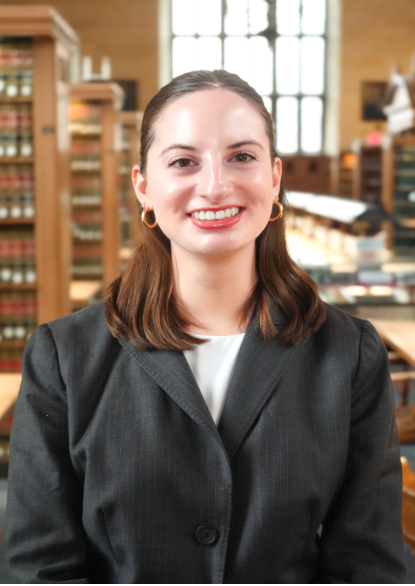
Rose Kores is a second-year Master of Public Administration (MPA) candidate who is merging her interest in social policy with infrastructure and financial management. She earned her Bachelor of Arts in Political Science from Belmont University, where she gained experience in state and local government, working at the intersection of legislative affairs and constituent services. In the long term, Rose aspires to lead the development, implementation, and preservation of critical infrastructure in the healthcare, education, and election sectors as an administrative and regulatory attorney and public manager.