
By: Angel Puder
Edited by: Maddie Miele
Policy and Administrative Background
During the COVID-19 pandemic, the United States Department of Agriculture’s (USDA) Food and Nutrition Service (FNS) authorized the Families First Coronavirus Response Act of 2020 (FFCRA).12, 19 Section 2202(a) of FFCRA allowed all students to receive emergency waivers for the National School Lunch Program (NSLP) and the School Breakfast Program (SBP) without meeting eligibility requirements, temporarily establishing a universal free school meal program. Also, it allowed flexible meal distribution without needing to congregate in the same location. This improved food security for all children by guaranteeing two nutritious meals daily. In 2022, Congress declined to renew the Act due to political polarization, shifting fiscal priorities, lobbying pressures, and a preference for state-level solutions.15 The sudden loss of this essential public service left millions of children dependent on their family’s limited financial resources, deepening food security and exposing inequalities in access to basic needs. Without FFCRA, school districts faced significant challenges in maintaining efficiency, effectiveness, and equity for meal service due to increased administrative burden, unpredictable funding, and negative impacts on student health and learning. Returning to pre-pandemic guidelines illustrates administrative racism, administrative evil, and a lack of accountability.
School Meal Program’s Administrative Structure
The NSLP and SBP feed tens of millions of children each school day.20 The USDA, through the FNS, oversees federal school meal programs by facilitating funding and guidelines for school districts to allow eligible students to receive free meals. The USDA and FNS work with policymakers to influence guidelines and funding changes to improve the overall scope of the program. State Departments of Education are responsible for monitoring and implementing the guidelines given at the federal level to receive proper funding. They are also the biggest advocates for increased state-level support for school meal programs. The local school districts and boards of education are the daily decision-makers on meal quality, eligibility criteria, and school meal budgets. School districts receive federal funding to reimburse the costs they incur in serving eligible students. Administrative reimbursement is based on prior years’ program expenditures.13 Families are directly impacted by school meal legislation since they cover the financial difference if their child does not qualify for benefits.
Nonprofit organizations such as Feeding America, No Kid Hungry, and Food Research & Action Center actively lobby for policy changes in favor of food security in public schools. They work directly with federal and state policymakers to advocate for administrative reform and increased funding. Advocacy groups like, The School Nutrition Association (SNA), and think tanks like, the Brookings Institution, provide research and policy suggestions. Each stakeholder is held accountable for their participation in this larger system.10 They collaborate to provide school meals for students by working towards Universal School Meals as the end goal.
Efficiency, Effectiveness, and Equity
Under FFCRA, school meal programs can function at their most efficient, effective, and equitable levels due to decreased administrative burdens.10 With the current federal school meal programs, school staff screen children for eligibility verification and require the family to complete a complex application with strict income requirements. Many families avoid filling out the form due to embarrassment of not financially providing for their child.7 Other families may not complete the form due to confusion surrounding what the form requires.7 This administrative burden leaves staff with extensive paperwork that uses valuable time otherwise spent on meal distribution and student support.
Removing the FFCRA undermined the efficiencies of school meal programs. Universal access to school meals eliminated the need for school staff to track students’ lunch accounts and remind parents to add funds throughout the year. FFCRA includes families that do not qualify under the current income regulations but would experience financial burdens paying for school meals with their limited income. This allowed schools to serve more students with fewer logistical barriers. Segmented meal service impacts the speed and inclusiveness of meal distribution by reducing participation. When a student is in debt, they do not receive breakfast and lunch that day until their account is funded, which leads them to go hungry for an indefinite amount of time. Without the money, the school cannot properly budget for school meals and is left with a deficit. In the 2016-2017 school year, 75 percent of United States school districts reported growing student meal debt.11 In 2022, the USDA estimated an over 40 percent decrease in funding for school lunches at an average school district if the waivers were reversed.15 Supply chain issues and rising food and labor costs created a deficit that threatened school districts’ meal distribution budgets for 2023.
Excluding students from receiving free or reduced-price meals leads to inequities in food security across the school and increased stigma about receiving meal benefits.2 Lunch shaming includes telling a student to add money to their lunch account and throwing away their meal to create shame and stigma around mealtime.1, 9 School districts have previously stamped students’ hands with reminders to add money to their lunch account or required the student to do chores for food, adding to the embarrassment.11 Students at a Rhode Island school who qualify for free or reduced-price meals may receive different, lower-quality meals than their out-of-pocket paying peers across school districts.11 Students may opt out of eating during breakfast and lunch to avoid embarrassment, which leads to lower test scores and lower physical and mental health. A lack of access impacts other life decisions as the student grows up in the school district and becomes an adult.16 Low-income students will face these changes and fall deeper into food insecurity as the Act expires.3, 15 The original purpose of the Federal Lunch and Breakfast Program is to provide equitable access to nutritious food, but reversing it is doing the opposite for students. Inequities will fester as the FFCRA expires.
Congressional Actions and Opinions
Against
By 2022, the United States had a polarized political climate unwilling to work together on previously bipartisan issues. Congress disagreed over federal aid and the government’s role in crisis management as the COVID-19 pandemic was winding down. The Biden Administration, with support from congressional Democrats, urged legislators to renew the school meal waivers.15 Most Republican lawmakers, as part of broader fiscal conservatism, argued to end pandemic-era programs because they believed Americans were financially stable enough to not receive government support. Senate Minority Leader Mitch McConnell stated the waivers were a temporary fix and blamed the Biden Administration for not extending the school lunch programs as part of the $1.9 trillion stimulus passed in 2021.15 Senator Mitch McConnell attributed responsibility for extending the waivers to the Biden Administration and Democratic lawmakers, emphasizing that further action would require bipartisan agreement. Republican legislators received increased pressure to reduce federal spending to avoid inflation and increase the national deficit.15 FFCRA required over $11 billion for school meal waivers, so Republicans decided it was financially unsustainable and unnecessary since schools reopened and students returned to in-person learning.22 This decision is an ethical trade-off between immediate human needs and long-term economic stability.10
Republican lawmakers have cited fiscal conservatism as the rationale for eliminating universal school meals, a decision that some critics argue may disproportionately affect marginalized communities.22 The decision overwhelmingly impacts low-income, and minority students compared to upper-middle and middle-class peers. It fails to acknowledge historical inequalities integrated in income-based waiver processes. Removing universal school meals increases the opportunity gap between low-socioeconomic or minority students and their more affluent or white counterparts. Legislators pushed for state-level solutions to fill in the gap they created by declining to renew the school meal waivers.15 Republicans favored decentralizing the effort and limiting federal oversight of program funding and administration, which led to the failed renewal attempt.
In Favor
Nonprofit organizations, school nutrition advocates and school districts advocated in favor of extending school meal waivers in FFCRA by contacting Congressional members through letters, email, and media statements. Concerns were raised about the rigid food and congregation guidelines that lacked flexible choices on how to distribute and categorize food.4 Schools would have to eliminate grab-and-go stations and classroom distribution and receive financial penalties if meals fail to meet nutritional requirements.4 Lisa Davis, Senior Vice President of No Kid Hungry, expressed her concerns for all public schools, but especially rural communities’ due to inflated food costs and supply-chain disruptions causing food vendors to cancel contracts unexpectedly.4 Securing a new contract depleted schools’ limited budgets due to recently inflated prices.
The School Superintendent Association (AASA) represents superintendents from 13,000 school districts, including rural, suburban, and urban areas with various political and educational philosophies.4 Noelle Ellerson Ng, Associate Executive Director of Advocacy and Governance at AASA, stated her support of the waivers by emphasizing the negative impact a reversal would have on all the good work done through this Act. “Whether the opposing Republicans personally opposed or opposed on behalf of the people of their states or opposed on behalf of people in their caucus, at the end of the day this is a no-win move that will hurt kids, leave kids hungry and reverse so much good that started from an overwhelmingly bipartisan policy proposal,” Ellerson Ng says.4
President Biden and Democratic Senators, Martin Heinrich and Ben Ray Luján of New Mexico, advocated for keeping the waivers because they acknowledged the positive impacts they had on students overall, especially low-income and minority students.8 They added political pressure to policymakers, but the Republicans did not shift on their stance, allowing the waivers to expire.4
Federal Solutions
In June 2022, Congress passed the Keep Kids Fed Act of 2022, which included increased meal reimbursement rates, increased support of summer and childcare programs, eliminated universal free meals, and added temporary flexibilities for school staff. 21 This Act served as a middle-ground solution in Congress by eliminating universal free meals but increasing financial support in other areas.
A few years later, President Trump signed ”One Big Beautiful Bill” (H.R. 1) on July 4, 2025, which made cuts to Medicaid and the Supplemental Nutrition Assistance Program (SNAP). This impacts students’ free school meal access through the USDA’s direct certification program.6 These cuts may have a domino effect for children across the country, including fewer children automatically eligible for free school meals with cuts to SNAP and Medicaid, increased administrative burden on school staff, decreased applications submitted for needy families, fewer schools enrolled in CEP, and states cutting school nutrition programs due to budget constraints.18 With the passage of the One Big Beautiful Bill, the outlook for a universal school meal program in the future appears unlikely.
State Solutions
In 2022, states took the lead in addressing food security since the expiration of the pandemic-era school meal waivers. In 2024, eight states have permanently legislated Healthy School Meals for All, a bill offering school breakfast and lunch to all students at no charge to families.5 The states include California, Colorado, Maine, Massachusetts, Michigan, Minnesota, New Mexico, and Vermont. This is a large shift from 2019, when zero states provided universal school meals.17 Nevada offered healthy school meals for all students in the 2023-2024 school year. Illinois passed healthy school meals for all in 2024, but it is currently unfunded. Twenty-eight states and the District of Columbia have introduced legislation to provide free school meals to all students, but they have not moved forward. Research shows that school-aged children were 1.5 percent more likely to experience incidences of food insufficiency in states that did not extend universal free meals in the 2022-2023 school year.20
Conclusion
The end of pandemic-era universal school meal waivers highlighted an ethical dilemma in public policy when balancing the immediate nutrition needs of children and long-term fiscal stability. Prevalent disparities among low-income and minority students were amplified after the expiration of the universal school meal waivers. Administrative structures can alleviate or perpetuate inequities depending on their availability of resources to support vulnerable communities. The temporary relief offered by the Keep Kids Fed Act is an inadequate solution because the income-based eligibility model fails to address all the food security needs of students. Stakeholders need to focus on a comprehensive approach that prioritizes the health and educational success of students without compromising sustainable financial practices. A commitment to policies that provide universal access to nutritious school meals, advocate for economic sustainability, and emphasize social justice in school meal programs will equitably address student needs.
Work Cited
- American University’s School of Education. “What Is Lunch Shaming? How Lunch Impacts Student Learning.” American University School of Education, June 30, 2020. https://soeonline.american.edu/blog/what-is-lunch-shaming/.
- Baker, Jordan. “Pandemic Child Nutrition Waivers a Game-Changer for Students, Families, Schools, Report Finds.” Food Research & Action Center, June 16, 2022. https://frac.org/news/largedistrict2022.
- Baker, Jordan. “Report Reveals Drop in School Meals Participation after Pandemic-Era Child Nutrition Waivers Expired.” Food Research & Action Center, March 21, 2024. https://frac.org/news/reachreportmar2024.
- Camera, Lauren. “Congress Set to Cut Funds That Made School Meals Free.” U.S. News & World Report, March 9, 2022. https://www.usnews.com/news/education-news/articles/2022-03-09/congress-set-to-cut-funds-that-made-school-meals-free.
- Food Research & Action Center. State Healthy School Meals for All Legislative Chart. Washington, DC: Food Research & Action Center, 2024. https://frac.org/wp-content/uploads/HSMFALegislativeChart2.1.23.pdf.
- Gingerella, Benita. “President Trump Signs Reconciliation Bill into Law: Here’s How It’ll Affect School Meals.” FoodServiceDirector. https://www.foodservicedirector.com/k-12-schools/president-trump-signs-reconciliation-bill-into-law
- Gutierrez, Elaine. Changes to SNAP Could Reduce Student Access to Free School Meals. Washington, DC: Urban Institute, May 2025. https://www.urban.org/sites/default/files/2025-05/Changes_to_SNAP_Could_Reduce_Student_Access_to_Free_School_Meals.pdf.
- Heinrich, Martin, and Ben Ray Luján. “Heinrich, Luján Push to Fight Food Insecurity as Benefits Cliff Rapidly Approaches.” Press release, June 17, 2022. U.S. Senate. https://www.heinrich.senate.gov/newsroom/press-releases/heinrich-lujn-push-to-fight-food-insecurity-as-benefits-cliff-rapidly-approaches
- Kamerick, Megan. “Schools Will Soon Have to Put in Writing If They ‘Lunch Shame.’” National Public Radio, April 17, 2017. https://www.npr.org/sections/ed/2017/04/17/524234563/schools-will-soon-have-to-put-in-writing-if-they-lunch-shame#:~:text=Every%20day%20in%20this%20country,to%20decide%20what%20happens%20next.
- Kettl, Donald F. Politics of the Administrative Process. 9th ed. Thousand Oaks, CA: SAGE Publications, 2023. https://cornellstore-bookshelf.vitalsource.com/books/9781071875575.
- Lou, Michelle. “75% of US School Districts Report Student Meal Debt. Here’s What They’re Doing to Combat the Problem.” CNN, May 17, 2019. https://www.cnn.com/2019/05/17/us/unpaid-school-lunch-debt-trnd/index.html.
- National Education Association’s Center for Advocacy. “FFCRA: School Meals, SNAP, and Food Security Measures.” National Education Association, April 1, 2020. https://www.nea.org/resource-library/ffcra-school-meals-snap-food-security.
- No Kid Hungry Center for Best Practices. School Meal Policy. Washington, DC: No Kid Hungry Center for Best Practices, 2024. https://bestpractices.nokidhungry.org/policy-and-advocacy/school-meals.
- PBS NewsHour. Families Scramble for Aid as Pandemic-Era Free Meal Program for Students Comes to an End. YouTube video, September 12, 2022. https://www.youtube.com/watch?v=ODpxIfJ1E4Y.
- Reiley, Laura, and Tony Romm. “Pandemic Expansion of School Lunch Program Appears Slated to End Suddenly.” The Washington Post, March 7, 2022. https://www.washingtonpost.com/business/2022/03/07/school-nutrition-program-covid-waivers/.
- “School Meal Statistics.” School Nutrition Association. Accessed October 12, 2025. https://schoolnutrition.org/about-school-meals/school-meal-statistics/.
- School Nutrition Association. (2019). 2019 State Legislative Report (final 2019 report). https://schoolnutrition.org/resource/2019-state-legislative-report-final-2019-report/
- School Nutrition Association. “Congress Passes Mega Bill that Harms School Meal Programs.” News release, July 3, 2025. https://schoolnutrition.org/sna-news/congress-passes-trumps-mega-bill-that-harms-school-meal-programs/
- U.S. House of Representatives. H.R. 6201 – Families First Coronavirus Response Act. March 14, 2020. Office of the Clerk, U.S. House of Representatives. https://clerk.house.gov/Votes/2020102.
- Toossi, Sara. “State Universal Free School Meal Policies Reduced Food Insufficiency among Children in the 2022–2023 School Year.” U.S. Department of Agriculture, Economic Research Service, June 13, 2024. https://www.ers.usda.gov/amber-waves/2024/june/state-universal-free-school-meal-policies-reduced-food-insufficiency-among-children-in-the-2022-2023-school-year/#:~:text=The%20study%20found%20that%20the,the%20Federal%20Government’s%20waiver%20expired.
- United States Congress. S. 2089 – Keep Kids Fed Act of 2022. 2021. https://www.congress.gov/bill/117th-congress/senate-bill/2089.
- Williams, Brian N., and Bryson Duckett. “At the Juncture of Administrative Evil and Administrative Racism: The Obstacles and Opportunities for Public Administrators in the United States to Uphold Civil Rights in the Twenty-First Century.” Public Administration Review 80, no. 6 (2020): 1038–50. https://doi-org.proxy.library.cornell.edu/10.1111/puar.13279.
Author Bio
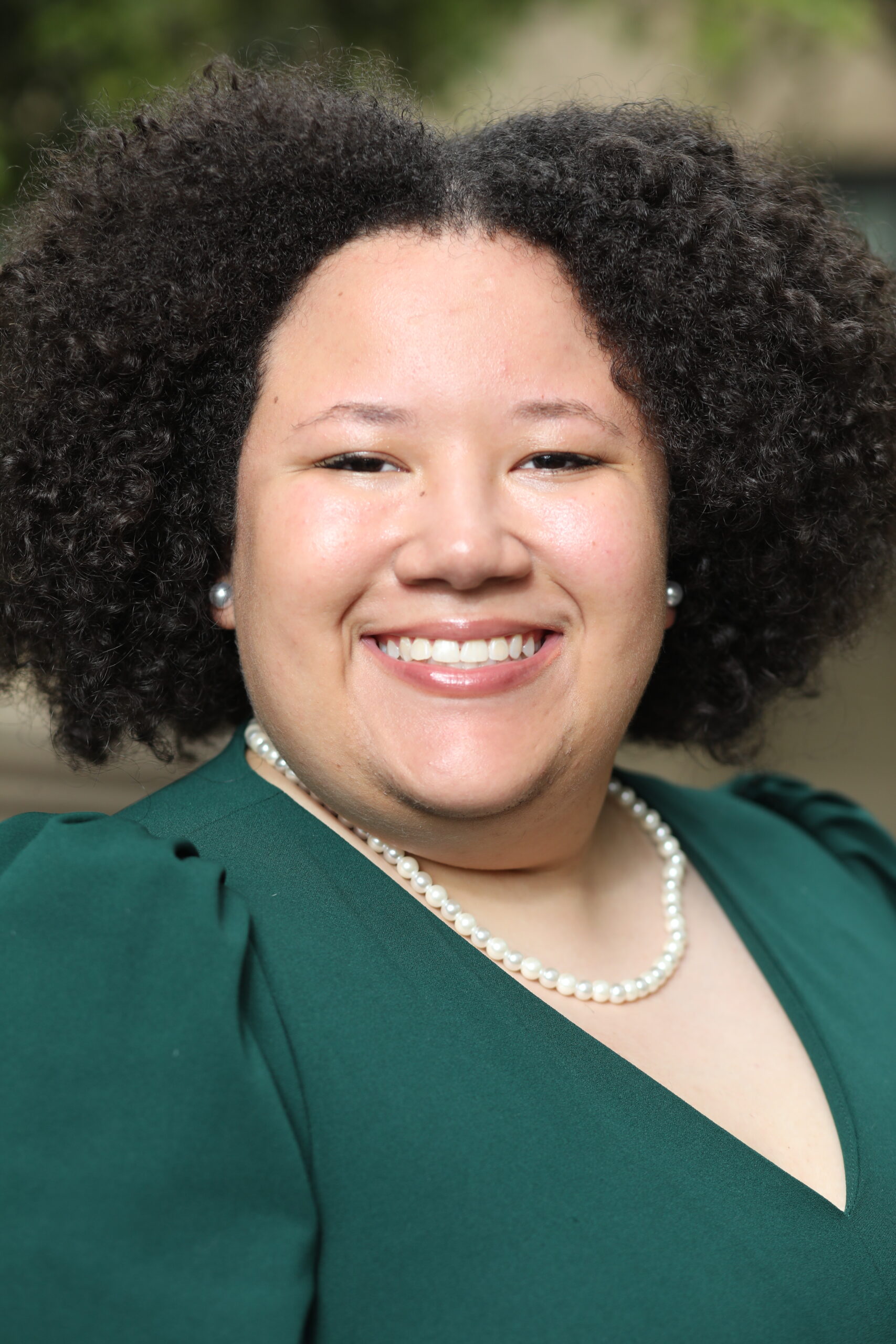
Angel Puder is a Master of Public Administration candidate at Cornell University’s Jeb E. Brooks School of Public Policy, where she studies social policy with a focus on food security, housing, and education equity. Before Cornell, she served as an AmeriCorps VISTA with Fifth Ward Community Redevelopment Corporation in Houston, where she led community revitalization and affordable housing projects. Her professional experience spans government, nonprofit, and consulting sectors, including the Houston Mayor’s Office and SKDK, where she advanced communications and equity initiatives. At Cornell, she serves as Co-President of Women in Public Policy and is the founding board member of Black in Brooks, promoting mentorship and inclusion in public policy education. Angel’s writing explores the intersection of public policy and lived experience, with a commitment to amplifying community voices often left out of policy debates.