
By: Issa Souaré
Edited By: Stephen Shiwei Wang
Executive summary
Rising demand for “transition minerals” is reshaping global supply chains. For West Africa, the development test is whether mineral extraction can be governed to build regionally scaled industries, quality jobs, and resilient public institutions without repeating enclave extractivism. This article proposes a practical policy sequence anchored in two African Union frameworks: the Africa Mining Vision (AMV) and the African Continental Free Trade Area (AfCFTA). It argues that value addition will be most viable when countries prioritize (1) rule credibility and transparency, (2) corridor governance that enables multi-user access and reliable energy/logistics, and (3) capability building across suppliers, standards bodies, and labor markets. This discussion is pertinent to the alignment of SDG and Agenda 2063. SDG 9 (industry, innovation, infrastructure) and SDG 16 (institutions), alongside Agenda 2063’s structural transformation and regional integration ambitions.1, 2
Why this Matters Now
The clean-energy transition is accelerating demand for minerals used in batteries, electricity networks, and renewable technologies. The International Energy Agency (IEA) frames critical minerals as essential to clean-energy transitions and shows that demand growth in climate-consistent scenarios increases pressure on supply chains and governance systems.3 For African producers, the opportunity is real, but so is the risk: pursuing beneficiation through isolated national projects can produce expensive facilities that fail to create broad-based linkages.
A more durable pathway is to treat minerals as inputs into a regional production system where processing, component manufacturing, and supporting services can be distributed across countries based on comparative advantage and access to infrastructure. AfCFTA is the continent’s main institutional vehicle for such regional value chains, providing a framework for deeper intra-African trade and cooperation.4
A Policy Lens: “Regional Value Chains” Rather Than “Smelters”
The Africa Mining Vision calls for transforming Africa’s mineral resources into broad-based development, emphasizing linkages, value addition, and transparent governance.5 AfCFTA, in turn, establishes a legal framework designed to expand intra-African trade and support integration—conditions required to reach scale in manufacturing and intermediate goods.6 These frameworks are complementary: AMV defines the development purpose of minerals, while AfCFTA provides the market-integration architecture to make regional industrialization feasible.
The policy question is therefore not whether West Africa should “add value,” but how to design steps of implementable policies that create (1) credible rules, (2) bankable infrastructure platforms, and (3) investable capabilities. Without those conditions, value-addition mandates may raise costs, intensify political bargaining over rents, and ultimately undermine competitiveness.
Three Governance Tests for Mineral-led Industrialization
- Rule credibility and transparency
Mineral-led industrial strategies rely on long-lived investments. Credible rules such as clear licensing procedures, predictable fiscal frameworks, and disclosure practices can effectively lower uncertainty for productive investors and raise government accountability to citizens. AMV emphasizes transparent and equitable exploitation as the foundation for minerals to support development outcomes.7 In practice, transparency should be treated as an industrial policy instrument: it reduces rent-seeking risk and improves the political legitimacy needed for large infrastructure and processing projects.
- Corridor and infrastructure governance
Processing is energy-intensive and logistics-dependent. The key issue is not only building corridors (rail, ports, power), but governing them as shared industrial platforms. Multi-user access rules, transparent pricing, and maintenance financing are essential to avoid single-user capture and to enable supplier clusters and manufacturing zones along the corridor. AfCFTA’s integration objectives imply that corridor reforms should also prioritize customs modernization, standards cooperation, and cross-border logistics efficiency.8
- Capability building and standards readiness
Value chains depend on people, firms, and institutions that can meet quality, environmental, and labor standards. The World Bank’s Climate-Smart Mining initiative highlights the need to ensure mineral supply supports climate objectives while managing environmental and social risks.9 For West Africa, capability-building should include supplier development, technical and vocational pathways, accredited testing laboratories, and monitoring systems that can verify performance claims for international and regional buyers.
A Feasible Reform Sequence for West Africa
Industrial policy debates often start with processing mandates. A more feasible sequence begins with enabling conditions that reduce political and financial risk while building confidence among citizens and investors.
- Step 1 (0–12 months): Establish a transparency baseline (standardized licensing and fiscal rules; clear institutional responsibilities).10
- Step 2 (6–24 months): Govern corridors as multi-user platforms (access rules, tariff policy, reliability targets, and maintenance funding) to convert export infrastructure into industrial infrastructure.
- Step 3 (6–24 months): Implement trade facilitation and standards readiness to reduce border frictions and enable intermediate goods to move under AfCFTA disciplines.11
- Step 4 (12–36 months): Deploy targeted capability tools (supplier development, skills pipelines, and performance-linked incentives) to scale linkages rather than merely announce them.
Political Economy: Making Reform Durable Under Real Constraints
Extractives frequently sit at the center of state-business relations; reforms that reduce discretion can threaten entrenched interests. This does not make reform impossible, but it does require deliberate design: phased implementation, transparent benchmarks, and incentives that convert short-term elite interests into longer-term gains from industrial expansion. Development partners can support this shift by linking finance to measurable governance and corridor performance outcomes not just limited to construction milestones.
Regional coordination can also lower domestic political costs. When corridor governance, standards infrastructure, and trade facilitation are pursued through regionally agreed benchmarks, governments can present reforms as integration commitments rather than discretionary concessions. AfCFTA’s cooperative architecture provides a platform for that approach.12
Recommendations
National governments: prioritize the credibility of regulations by publishing clear licensing/fiscal rules and strengthening disclosure where feasible; treat transparency as an industrial policy asset.13
Trade and customs authorities: package corridor reform with trade facilitation, standards readiness, and border efficiency improvements to enable regional intermediate goods and manufacturing under AfCFTA.14
Regional institutions: pilot multi-user corridor governance and standards cooperation to demonstrate cost savings and scale benefits.
Development partners: tie financing to governance and performance indicators (corridor reliability, disclosure benchmarks, standards accreditation) to reduce the risk of prestige projects.
West Africa’s minerals can support development only if they are governed to build capabilities and regionally scaled industries. AMV sets the development ambition for minerals, while AfCFTA offers the integration architecture to achieve scale. The strategic task is execution: credible rules, corridors governed as shared platforms, and investments in people and standards. If these foundations are built, minerals can become inputs into inclusive industrialization—rather than another cycle of enclave extraction.
Work Cited
- African Union Commission. 2015. Agenda 2063: The Africa We Want (Framework Document). Addis Ababa: African Union. https://au.int/sites/default/files/documents/33126-doc-framework_document_book.pdf.
- United Nations. n.d. “The 17 Goals.” Sustainable Development Goals. https://sdgs.un.org/goals.
- International Energy Agency (IEA). 2021. The Role of Critical Minerals in Clean Energy Transitions: Executive Summary. Paris: International Energy Agency. https://www.iea.org/reports/the-role-of-critical-minerals-in-clean-energy-transitions/executive-summary.
- African Union. 2018. Agreement Establishing the African Continental Free Trade Area (Consolidated Text). https://au.int/en/treaties/agreement-establishing-african-continental-free-trade-area.
- African Union. 2009. Africa Mining Vision. https://au.int/en/ti/amv/about.
- African Union. 2018. Agreement Establishing the African Continental Free Trade Area (Consolidated Text). https://au.int/en/treaties/agreement-establishing-african-continental-free-trade-area.
- African Union. 2009. Africa Mining Vision. https://au.int/en/ti/amv/about.
- African Union. 2018. Agreement Establishing the African Continental Free Trade Area (Consolidated Text). https://au.int/en/treaties/agreement-establishing-african-continental-free-trade-area.
- World Bank. n.d. “Climate-Smart Mining: Minerals for Climate Action.” https://www.worldbank.org/en/topic/extractiveindustries/brief/climate-smart-mining-minerals-for-climate-action.
- African Union. 2009. Africa Mining Vision. https://au.int/en/ti/amv/about.
- African Union. 2018. Agreement Establishing the African Continental Free Trade Area (Consolidated Text). https://au.int/en/treaties/agreement-establishing-african-continental-free-trade-area.
- African Union. 2018. Agreement Establishing the African Continental Free Trade Area (Consolidated Text). https://au.int/en/treaties/agreement-establishing-african-continental-free-trade-area.
- African Union. 2009. Africa Mining Vision. https://au.int/en/ti/amv/about.
- African Union. 2018. Agreement Establishing the African Continental Free Trade Area (Consolidated Text). https://au.int/en/treaties/agreement-establishing-african-continental-free-trade-area.
Author Bio
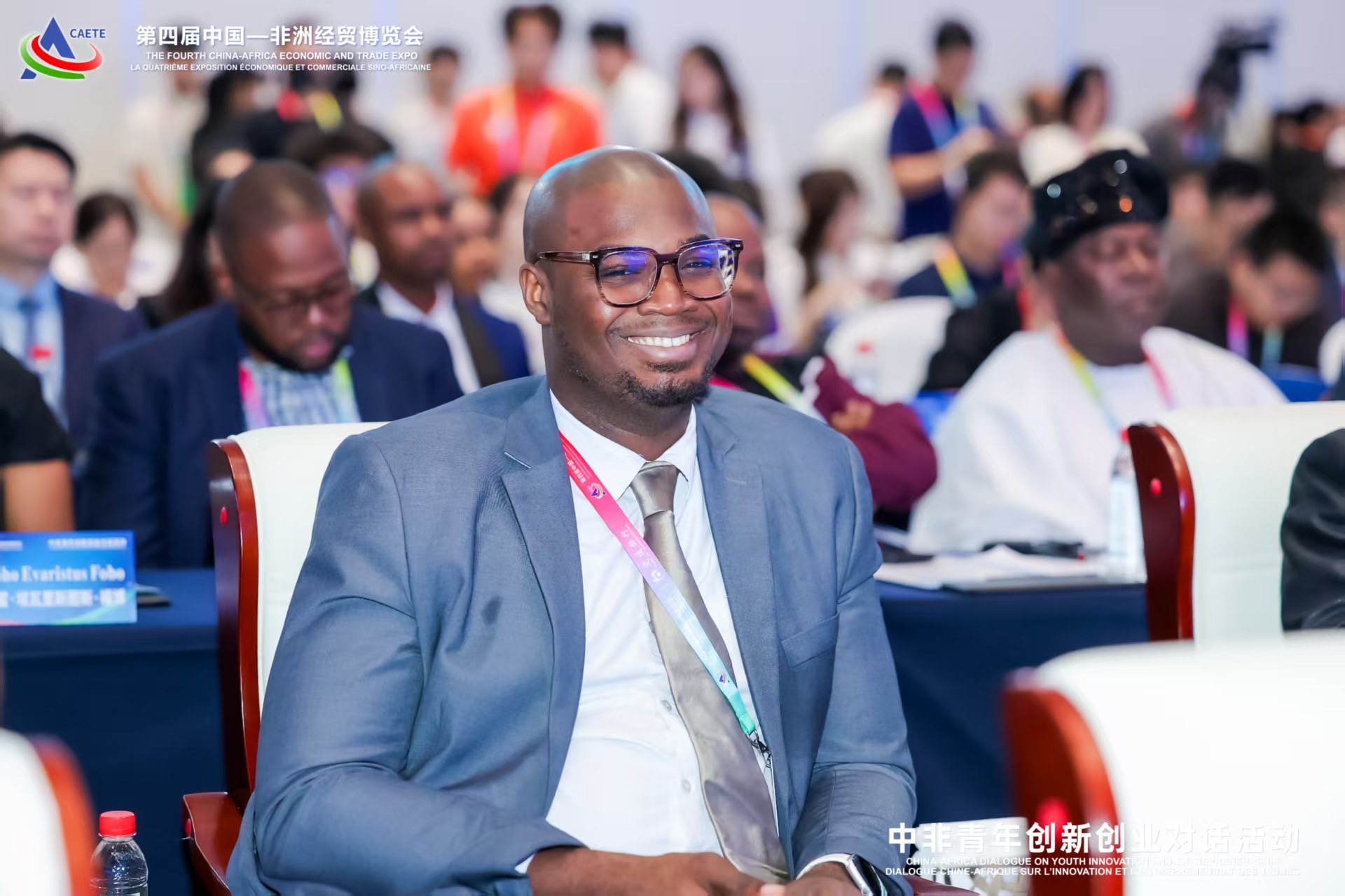
Issa Souaré is an international development consultant and Founder & Executive Director of Sustainable Development Africa (SDA), a nonprofit organization advancing climate-resilient livelihoods, inclusive governance, and economic resilience in West Africa. He previously worked with the United Nations, the African Union, and Delivery Associates, supporting governments and institutions on policy implementation, stakeholder engagement, and sustainable development strategy. His work focuses on resource governance, regional economic integration, and climate-aligned industrial policy across African economies. Souaré’s research and policy interests examine how governance institutions and regional trade frameworks can transform natural resource wealth into inclusive growth and long-term economic resilience.