By: Samantha Kate McGovern
Edited By: Stephen Shiwei Wang
Introduction
During the several hours trapped in traffic in San José for a school trip, I saw how urban streets grind to a near standstill: honking loudly, streets filled with cars inching forward while electric bikes (e-bikes) fought to take advantage of impossibly tight gaps, trying to maintain speed. And yet, near-constant battles between bikes and cars slowed everyone on the street. Those living in the city opted to bike to avoid traffic, but the resulting stalemate only fueled further congestion. This scenario is identical worldwide; it is a pressing challenge for major cities to accommodate new and changing vehicle demand, especially as e-commerce continues to rise. As delivery demands grow, city centers must contend with managing shrinking street space, worsening air quality, and renewed sustainability commitments. Fossil fuel powered vehicles contribute disproportionately to both congestion and emissions, especially on stop-and-go routes.1 Cities like New York City are exploring electric cargo bicycles (e-cargo) as a technological solution, but full integration remains limited not only by policy gaps, but also by infrastructure readiness and the local acceptance of cycling as a transport mode.
Tight streets, limited parking, and crowded sidewalks place additional pressure on infrastructure.2 Cities in the UK, including London, are piloting e-cargo delivery programs to address rising congestion and sustainability pressures.3 Around the world, other cities such as Berlin, Cape Town, and New York are also experimenting with similar initiatives, sometimes alongside congestion pricing policies. This article examines e-bikes as an environmental and policy tool for last-mile logistics in dense urban environments. It analyzes three aspects: (1) the environmental impacts of integrating e-bike delivery, (2) the regulatory gaps that hinder institutionalization, and (3) the scalability of these programs. This analysis demonstrates that e-bike delivery has proven effective in emissions reduction worldwide, but success depends on coordinated policy implementation.
Environmental Impact Reduction
E-cargo bikes are being employed to reshape how consumers and businesses think about last-mile delivery. In New York City, e-cargo bikes are replacing short-range van trips without slowing deliveries post-pilot, aiding post-congestion pricing implementation.4 In the global south, Cape Town is using delivery programs that improve traffic flows and create safer streets for all commuters.5 Across the world in Shenzhen, e-bikes are creating better environmental outcomes, but navigating crowded streets creates new dangerous interactions between bikes, cars, and pedestrians.6 Guangzhou has seen similar issues, underscoring a need for clearer regulations.7 Beyond Asia and Africa, research in Finland demonstrates that integrating e-bikes into urban delivery networks improves sustainability but requires new cultural tools to encourage adoption.8 Research in Ghana suggests that early implementation of e-cargo bikes will consume less energy per mile than diesel vehicles.9 Simulation-based logistics models show that combining e-vans with e-cargo bikes through micro-depots can reduce delivery costs and improve efficiency in dense urban environments.10 Together, these examples show a common global thread: e-bikes can deliver better environmental and transportation outcomes, but only when local conditions, infrastructure, and flexible planning support them.
Policy and Regulatory Gaps
In New York City, e-cargo bikes are a functionally new, regulatory gray area for commuters on the streets.11 A renewed focus on defining vehicles and their limits is aimed at enforcing policies that prevent conflicts and confusion during peak school traffic cycles.12
Congestion pricing is one tool that can tip the balance toward low-emission transportation. By charging drivers to enter high-traffic areas, cities seek to reduce fossil-fueled vehicle use.13 This shift can create more favorable operating conditions for e-cargo bikes in dense urban environments. Early NYC data since implementation suggest that subway and bus ridership rose shortly after and that more commuters are leaving their cars behind. Fewer cars on the streets mean less congestion, which directly benefits e-bike delivery by allowing riders to move faster and more reliably. Policies like congestion pricing are beginning to affect freight delivery patterns, encourage low-emission vehicles, and support the use of e-cargo bikes in New York City.14 Congestion pricing isn’t just changing commuter behavior: It’s reshaping urban landscapes.
Figures 1–3 illustrate trends in NYC subway and bus ridership before and after the congestion pricing. Figure 1 shows subway ridership trends, while Figure 2 illustrates bus ridership trends, and Figure 3 compares combined ridership to the previous year.
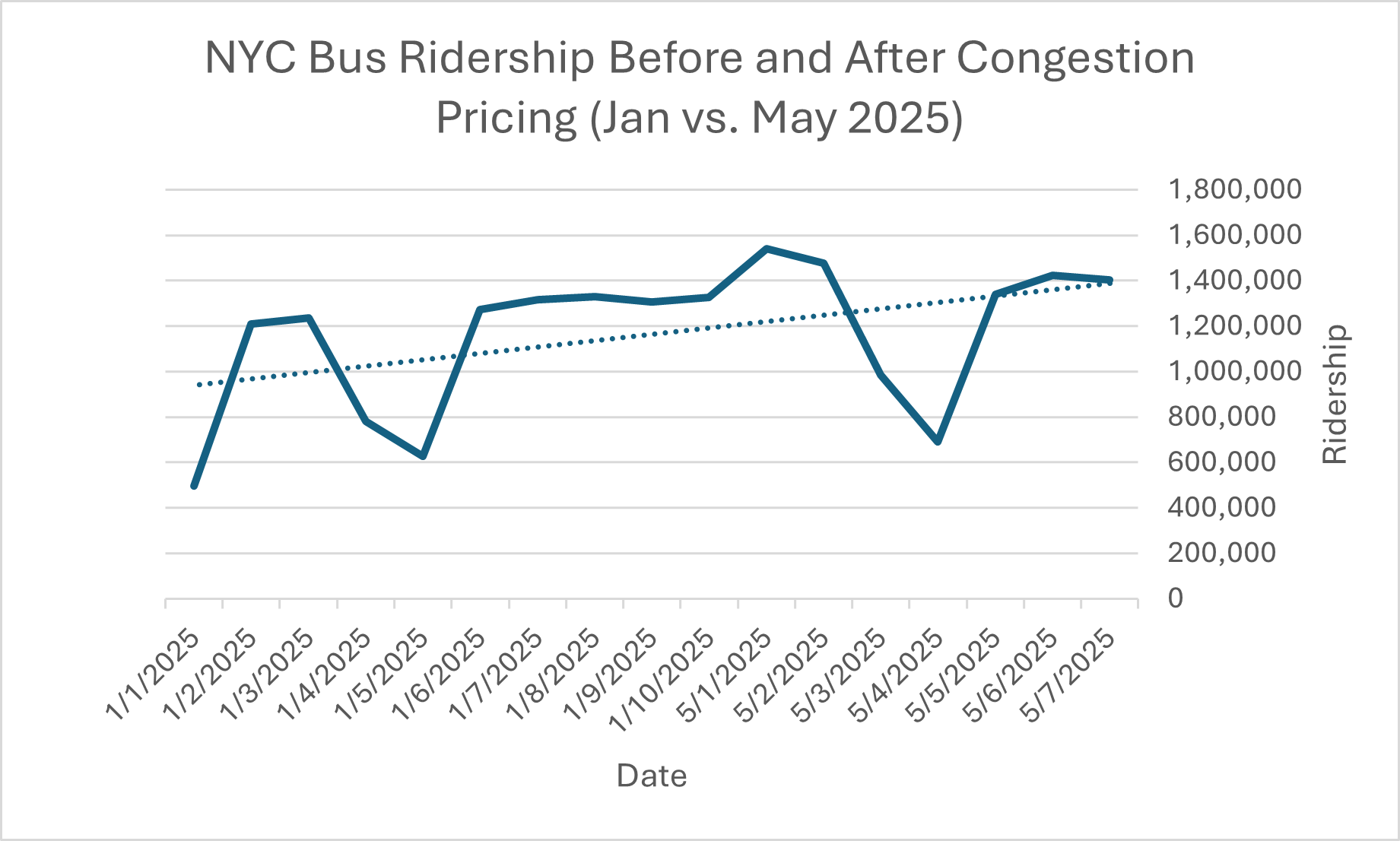
Figure 1 Data Source: MTA Daily Ridership Data: 2020 – 2025, Updated May 7, 2025
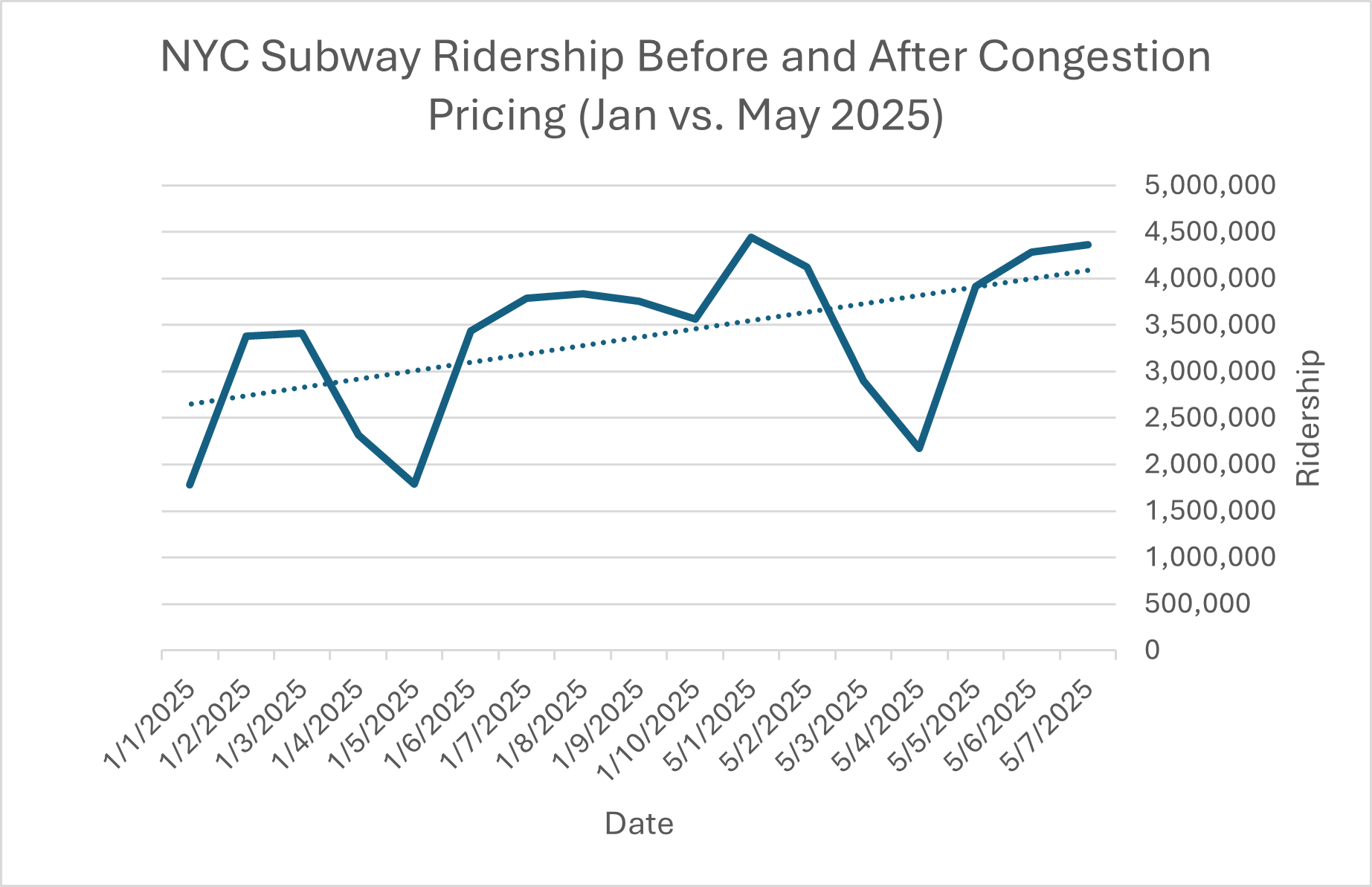
Figure 2 Data Source: MTA Daily Ridership Data: 2020 – 2025, Updated May 7, 2025
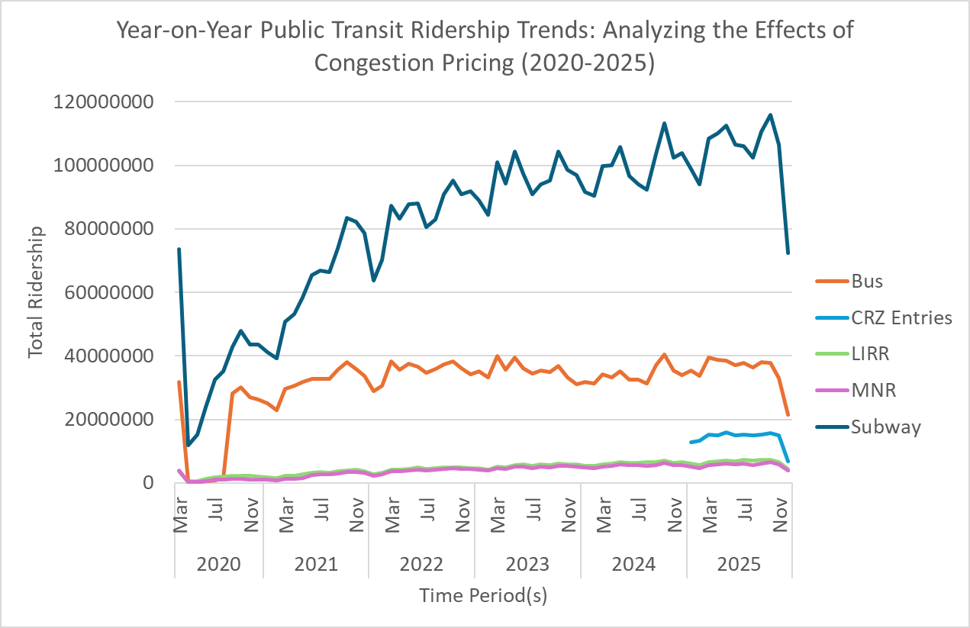
Figure 3 Data Source: MTA Daily Ridership Data: 2020 – 2025, Updated December 19, 2025
The overall trends (Figure 3) show that total ridership for buses and subways in 2025 remained generally stable, with a slight increase compared to 2024, following typical seasonal patterns.15 These data suggest that commuters continued to rely on public transportation even after the implementation of congestion pricing. While there is no evidence of a large shift away from transit in this dataset, the policy may create conditions that encourage alternative delivery modes, such as e-bikes, by reducing car traffic in the congestion pricing zone and making last-mile delivery more efficient.
While these early trends do not establish causality, supporters of the congestion pricing model are hopeful that it is already contributing to lower traffic congestion, cleaner air, and better conditions for micro-mobility solutions.
Feasibility and Scalability: Efficiency, Equity, and Infrastructure
E-bikes are better equipped to handle congestion than vans alone.16 Recent trials show that for typical short-range deliveries, an e-bike may cover routes without adding travel time.17 They are positioned to improve last-mile delivery efficiency by minimizing travel distances and reducing trips for cargo cycles.18 When companies implement decision tools to plan routes, they further cut travel time and reduce emissions.19 Optimization models for e-cargo bike routing, which account for energy consumption and balanced courier workloads, also enhance operations in densely populated urban areas.20
Equity is another important factor. While the largest last-mile distributors may have the resources to invest in e-bike fleets, smaller or independent providers may not.21 When subsidies are carefully implemented, city residents can benefit from reduced traffic. However, without thoughtful, flexible frameworks, cities can expect increased conflicts between pedestrians and cyclists that compromise outcomes.22
Infrastructure readiness also determines a city’s capability for change. When bike lanes are guaranteed, other factors like installing charging routes and bike parking become possible.23 In the case of New York, creating complements to congestion pricing and delivery efficiency were made possible when policies were implemented that set loading zone laws into effect, but only because bike lanes had been previously built.24 And because cities like Bogotá have a long history of culturally accepting and investing in cycling infrastructure, urban e-bike logistics became possible.25 Paris shows how pedestrian-priority zones can reduce vehicular conflict and improve safety for people walking and cycling.26
Even when policies and infrastructure are readily available, enforcement and education are vital to long-term success. Even when policies and infrastructure exist, active enforcement and education are crucial to ensure compliance and long-term safety, as seen in efforts to regulate high-speed e-bikes on school campuses.27 Firms, similarly, are also better positioned to scale once incentives and regulations are predictable.28 For e-bikes to gain momentum in the coming years, barriers must be addressed.29
Global Lessons and Policy Implications
Programmatically, patterns are starting to become apparent globally. Cities with successful e-cargo implementation appear to have three common qualities: clear regulations, infrastructure readiness, and equitable incentives. In North America, New York is demonstrating how e-bikes can provide sustainable solutions to changing urban planning initiatives with a combination of these three qualities.30 Across Europe, cities like London show that infrastructure alone isn’t enough, regulations and cultural readiness are necessary to introduce micro-mobility solutions to the last-mile sector.31
In emerging markets, this is even more apparent. In Cape Town, planners have proven that e-bike delivery can improve traffic flow and reduce emissions,32 but local conditions—like connected bike lanes, historical traffic conditions, and traffic culture around safety (including ever-changing immigrant politics)—will shape the results. Nairobi is yet another case that highlights the need for careful planning around local mobility patterns.33 Meanwhile, across the sea, Shenzhen shows that environmental gains can be significant, yet managing interactions with cars and pedestrians remains a constant battle that ever shifts public opinion.34 Nearby, Guangzhou reinforces lessons learned in other parts of China by providing the consistent oversight necessary to maintain policy adoption.35
Across the world, one pillar seems constant: when cities combine traffic reduction policies with supportive and flexible e-bike frameworks, they can enjoy long-lasting e-cargo adoption and measurable environmental benefits. Firms need clear regulations and infrastructure support, and delivery drivers need protective measures and marketable benefits.36 37 When those occur together, citizens alike can enjoy peaceful streets.38
Conclusion
Evidence from pilot programs in Bogotá, Cape Town, New York City, and Shenzhen, supported by simulation-based research on two-echelon e-cargo systems, shows that e-cargo can work alongside established vehicles without reducing efficiency and while expanding other urban benefits. Early data from cities using congestion pricing like New York suggests that prompting drivers away from private vehicles can pave the way for e-bike adoption.
Technology alone isn’t enough. Cities need clear frameworks, integrated infrastructure, and attention to equity. Municipalities must define vehicle classifications, offer support to smaller operators, and coordinate planning to ensure safety and efficiency. Delivery workers must be trained and protected, and residents stand to gain from quieter, cleaner streets. Observations from San José underline the stakes: without these supports, congestion persists and the promise of e-bikes remains unrealized. When cities, planners, and firms align their strategies, e-bike delivery can transform urban logistics from a source of emissions into a cornerstone of sustainable mobility—proving that smart policy is just as important as the technology itself.
Works Cited
- Azad, Mojdeh, William J. Rose, John H. MacArthur, and Christopher R. Cherry. 2023. “E-Trikes for Urban Delivery: An Empirical Mixed-Fleet Simulation Approach to Assess City Logistics Sustainability.” Sustainable Cities and Society 96 (2023): 104641. https://doi.org/10.1016/j.scs.2023.104641.
- Beyioku, Olajumoke Ajike. 2023. Evaluation of Barriers to the Adoption of Cargo Bikes for Package Delivery: Case Study of Finland. Master’s thesis, Master’s Programme in Urban Mobility, Aalto University.
- Blazejewski, Luke, Nicholas Davies, and Graeme Sherriff. 2020. Delivering the Last Mile: Scoping the Potential for E-Cargo Bikes. Salford: University of Salford.
- New York City Department of Transportation. 2024. “NYC DOT Authorizes the Use of E-Cargo Bikes on City Streets and Establishes Key Safety Standards.” New York City. Published March 15. https://www.nyc.gov/html/dot/html/pr2024/e-cargo-bike-on-city-streets.shtml.
- Christianson, Barry. 2026. “Riding toward a Greener Future: E-Bikes Transform Food Delivery in South Africa.” Mongabay. June 9. https://news.mongabay.com/2025/06/riding-toward-a-greener-future-e-bikes-transform-food-delivery-in-south-africa/.
- Zhou, Mo. 2025. “E bikes Jostle Residents and Cars in Shenzhen.” China Daily Hong Kong, June 27, 2025. https://www.chinadailyhk.com/hk/article/614766.
- Qiu, Quanlin. 2023. “Growing Number of Shared E Bikes a Cause for Concern in Guangzhou.” China Daily (Global Edition), May 31. https://global.chinadaily.com.cn/a/202305/31/WS647698aaa3107584c3ac30b3.html.
- Beyioku, Olajumoke Ajike. 2023. Evaluation of Barriers to the Adoption of Cargo Bikes for Package Delivery: Case Study of Finland. Master’s thesis, Master’s Programme in Urban Mobility, Aalto University.
- Schünemann, Jaron, Sebastian Finke, Semih Severengiz, Nora Schelte, and Smiti Gandhi. 2022. “Life Cycle Assessment on Electric Cargo Bikes for the Use-Case of Urban Freight Transportation in Ghana.” Procedia CIRP 105 (2022): 721–726.
- Caggiani, Leonardo, Aleksandra Colovic, Luigi Pio Prencipe, and Michele Ottomanelli. 2021. “A Green Logistics Solution for Last-Mile Deliveries Considering E-Vans and E-Cargo Bikes.” Transportation Research Procedia 52 (2021): 75–82. https://doi.org/10.1016/j.trpro.2021.01.010.
- New York City Department of Transportation. 2024. “NYC DOT Authorizes the Use of E-Cargo Bikes on City Streets and Establishes Key Safety Standards.” New York City, March 15. https://www.nyc.gov/html/dot/html/pr2024/e-cargo-bike-on-city-streets.shtml.
- Choi, Kenny. 2025. “Safety Advocates Pushing for Crackdown on Illegal ‘E-Motos’ at Bay Area Schools.” CBS San Francisco, December 8. https://www.cbsnews.com/sanfrancisco/news/bay-area-illegal-e-motos-crackdown-safety-advocates/.
- Clewlow, Regina. 2025. “Congestion Pricing: Transforming NYC and Urban Mobility Nationwide.” Forbes, January 15. https://www.forbes.com/sites/reginaclewlow/2025/01/15/congestion-pricing-transforming-nyc-and-urban-mobility-nationwide/.
- Pidcock, Lucy. 2024. Putting Water to Work: A Critical Assessment of Recent Marine Freight Planning in New York City. Master’s thesis, Pratt Institute.
- Metropolitan Transportation Authority. 2025. State of New York – MTA Daily Ridership Data: 2020–2025. Metadata Updated on January 17, 2025. MTA Daily Ridership and Traffic: Beginning 2020. https://catalog.data.gov/dataset/mta-daily-ridership-data-beginning-2020
- Llorca, Carlos, and Rolf Moeckel. 2021. “Assessment of the Potential of Cargo Bikes and Electrification for Last-Mile Parcel Delivery by Means of Simulation of Urban Freight Flows.” European Transport Research Review 13, no. 33 (2021). https://doi.org/10.1186/s12544-021-00491-5.
- Mohri, Seyed Sina, Mehrdad Mohammadi, and Tom Van Woensel. 2024. “Exploring Cargo E-Bikes for Last-Mile Deliveries: A Container-Centric Two-Echelon Approach.” Transportation Research Part C 159 (2024): 104492. https://doi.org/10.1016/j.trc.2024.104492.
- Rudolph, Christian, Alexis Nsamzinshuti, Samuel Bonsu, Alassane Ballé Ndiaye, and Nicolas Rigo. 2022. “Localization of Relevant Urban Micro-Consolidation Centers for Last-Mile Cargo Bike Delivery Based on Real Demand Data and City Characteristics.” Transportation Research Record 2676, no. 1 (2022): 365–375. https://doi.org/10.1177/03611981211036351.
- Caggiani, Leonardo, Luigi Pio Prencipe, Aleksandra Colovic, and Mauro Dell’Orco. 2020. “An Eco-Friendly Decision Support System for Last-Mile Delivery Using E-Cargo Bikes.” In Proceedings of the IEEE Conference on Intelligent Transportation Systems.
- Papaioannou, Eleni, Christina Iliopoulou, and Konstantinos Kepaptsoglou. 2023. “Last-Mile Logistics Network Design under E-Cargo Bikes.” Future Transport 3, no. 2 (2023): 403–16. https://doi.org/10.3390/futuretransp3020024.
- Beyioku, Olajumoke Ajike. 2023. Evaluation of Barriers to the Adoption of Cargo Bikes for Package Delivery: Case Study of Finland. Master’s thesis, Master’s Programme in Urban Mobility, Aalto University.
- Young Urbanists NPC and SDI Micro-Enterprise Trust. 2023. Safe Passage Programme: Future and Next Steps. Cape Town: Young Urbanists NPC and SDI Micro-Enterprise Trust.
- Boston Region Metropolitan Planning Organization. 2025. Exploring Cargo E-Bikes for Last-Mile Deliveries. Boston: Boston Region MPO.
- New York City Department of Transportation. 2024. “NYC DOT Authorizes the Use of E-Cargo Bikes on City Streets and Establishes Key Safety Standards.” New York City, March 15. https://www.nyc.gov/html/dot/html/pr2024/e-cargo-bike-on-city-streets.shtml.
- Helme, Jo. 2021. “How Bogotá Became Latin America’s Cycling Capital.” CityChangers, November 2. https://citychangers.org/how-bogota-became-latin-americas-cycling-capital/.
- Spatari, Alexander. 2024. “How Cities Can Use Paris as a Model for Implementing Safer Street Infrastructure.” Urban Institute, July 9. https://www.urban.org/urban-wire/how-cities-can-use-paris-model-implementing-safer-street-infrastructure.
- Choi, Kenny. 2025. “Safety Advocates Pushing for Crackdown on Illegal ‘E-Motos’ at Bay Area Schools.” CBS San Francisco, December 8. https://www.cbsnews.com/sanfrancisco/news/bay-area-illegal-e-motos-crackdown-safety-advocates/.
- Lee, Byeoung Chul, So Rim Han, and Byung Duk Song. 2025. “The Use of Electric Cargo Bike and Cycle for Sustainable Last Mile Delivery: Optimization and Evaluation.” Preprint. SSRN. https://doi.org/10.2139/ssrn.4516185.
- Mohri, Seyed Sina, Mehrdad Mohammadi, and Tom Van Woensel. 2024. “Exploring Cargo E-Bikes for Last-Mile Deliveries: A Container-Centric Two-Echelon Approach.” Transportation Research Part C 159 (2024): 104492. https://doi.org/10.1016/j.trc.2024.104492.
- Lee, Byeoung Chul, So Rim Han, and Byung Duk Song. 2025. “The Use of Electric Cargo Bike and Cycle for Sustainable Last Mile Delivery: Optimization and Evaluation.” Preprint. SSRN. https://doi.org/10.2139/ssrn.4516185.
- Ibid.
- Christianson, Barry. 2025. “Riding toward a Greener Future: E-Bikes Transform Food Delivery in South Africa.” Mongabay, June 9. https://news.mongabay.com/2025/06/riding-toward-a-greener-future-e-bikes-transform-food-delivery-in-south-africa/.
- Young Urbanists NPC and SDI Micro-Enterprise Trust. 2023. Safe Passage Programme: Future and Next Steps. Cape Town: Young Urbanists NPC and SDI Micro-Enterprise Trust.
- Zhou, Mo. 2025. “E bikes Jostle Residents and Cars in Shenzhen.” China Daily Hong Kong, June 27, 2025. https://www.chinadailyhk.com/hk/article/614766.
- Qiu, Quanlin. 2023. “Growing Number of Shared E Bikes a Cause for Concern in Guangzhou.” China Daily (Global Edition), May 31. https://global.chinadaily.com.cn/a/202305/31/WS647698aaa3107584c3ac30b3.html.
- Lee, Byeoung Chul, So Rim Han, and Byung Duk Song. 2025. “The Use of Electric Cargo Bike and Cycle for Sustainable Last Mile Delivery: Optimization and Evaluation.” Preprint. SSRN. https://doi.org/10.2139/ssrn.4516185.
- Beyioku, Olajumoke Ajike. 2023. Evaluation of Barriers to the Adoption of Cargo Bikes for Package Delivery: Case Study of Finland. Master’s thesis, Master’s Programme in Urban Mobility, Aalto University.
- Christianson, Barry. 2025. “Riding toward a Greener Future: E-Bikes Transform Food Delivery in South Africa.” Mongabay, June 9. https://news.mongabay.com/2025/06/riding-toward-a-greener-future-e-bikes-transform-food-delivery-in-south-africa/.
Author Bio

Samantha Kate McGovern is a second-year EMPA candidate at Cornell University’s Jeb E. Brooks School of Public Policy, with a focus on Public and Nonprofit Management. She is particularly interested in translating policy research into meaningful community outcomes and exploring innovative approaches to social equity and sustainable urban development. Through her writing and research, Samantha seeks to highlight underrepresented perspectives and inspire practical solutions that address complex societal challenges. This work is dedicated to her mother, whose example continues to inspire her commitment to public service.